
Why Materials Matter in a Reggio-Inspired Classroom
Updated: Aug 28
A pinecone can become part of a sculpture. A wooden block can become a building, a bridge, or a pretend telephone. Clay can become an animal, a letter, or something entirely new.
That's the beauty of open-ended materials in a Reggio-inspired classroom.
Rather than giving children materials that can only be used one way, Reggio-inspired learning encourages children to experiment with materials that have many different possibilities.
What Materials Might You Find?
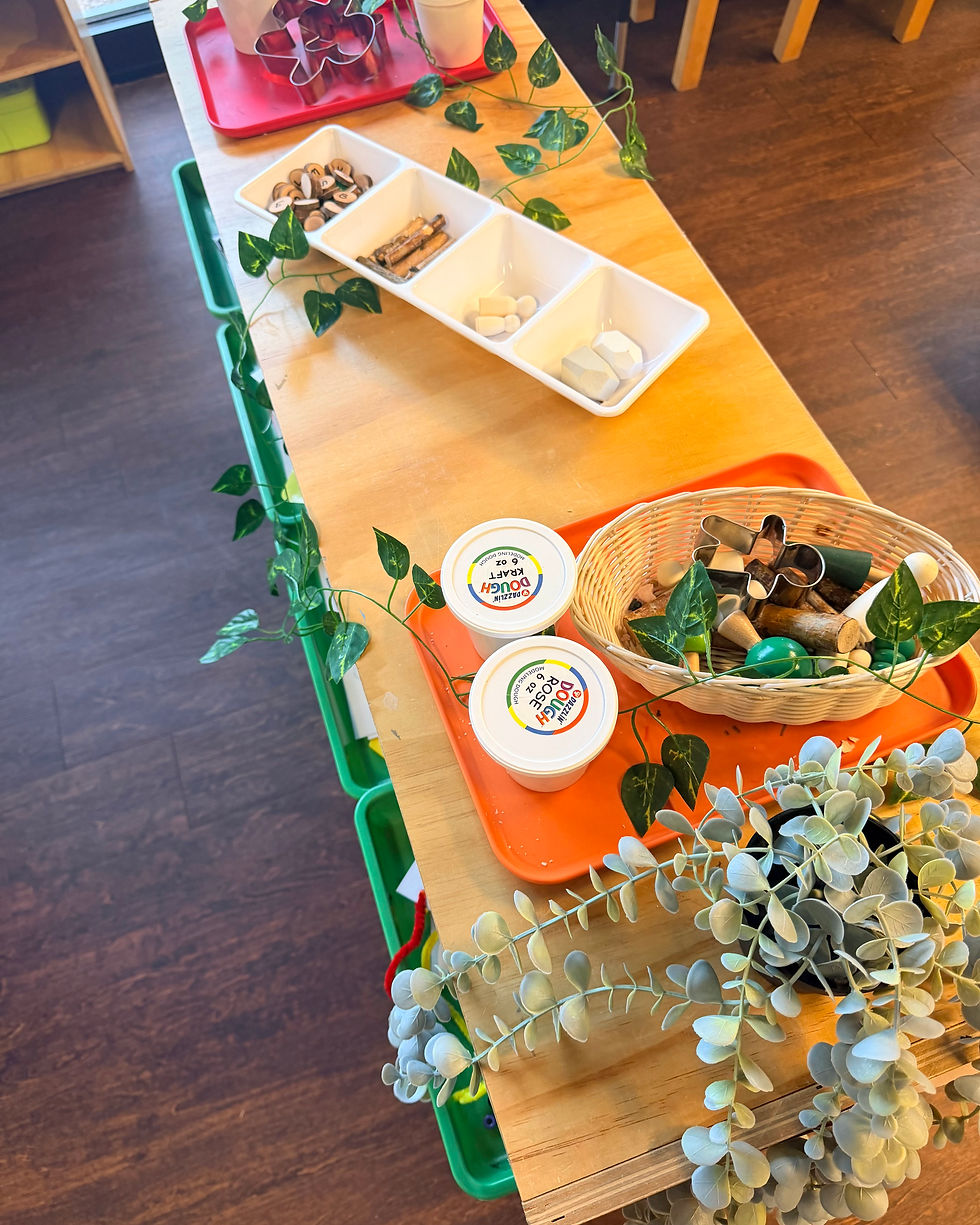
Children may explore with loose parts, wooden pieces, blocks, stones, shells, leaves, sticks, clay, paint, wire, fabric, recycled materials, sensory materials, light and shadow, and a variety of open-ended art supplies.
These materials might look simple—but the learning happening behind them is anything but.
When a child has to decide what a material will become, they are practicing creativity, critical thinking, problem-solving, fine-motor skills, planning, perseverance, and communication.
Instead of always asking children to recreate an adult's example, we want to give them opportunities to develop and test their own ideas.
Process Over Product
This is also why process art and hands-on exploration are such important parts of our classrooms at The School House.
Sometimes the most meaningful part of an activity isn't what a child brings home at the end of the day. It's the experimenting, questioning, mixing, building, changing, and discovering that happened along the way.
Our teachers intentionally select and introduce materials that encourage children to wonder:
What happens if I try this?
How could I build this?
What else could this become?
By combining Reggio-inspired materials and exploration with intentional academic learning, we are able to give children opportunities to think creatively while building the foundational skills they will need for kindergarten and beyond.
Because sometimes the simplest materials can inspire the biggest ideas.



Comments